Things to Do in Port of Spain in May
May weather, activities, events & insider tips
Low Season · Budget Friendly
May Weather in Port of Spain
Long-run averages for May
90°F (32°C)
High Temp
75°F (24°C)
Low Temp
4.3 inches (109 mm)
Rainfall
76%
Humidity
14
Rainy Days
13
Sunny-Day UV
⚠ May marks the start of Trinidad's wet season, and the transition can include sudden intense thunderstorms with lightning, in the Northern Range foothills. Seek shelter in solid structures during electrical storms rather than waiting them out under trees or beach shelters.
⚠ Mosquito populations increase as standing water accumulates from early wet season rains. Dengue is endemic in Trinidad, and May through July sees a seasonal uptick. Use repellent consistently, during dawn and dusk hours and near vegetated areas.
⚠ Sea conditions along the north coast become rougher as the wet season progresses. Rip currents at Maracas Bay and Las Cuevas intensify in May compared to the dry months. Swim near lifeguard stations, which are staffed on weekends and holidays, and ask locals about current conditions before entering the water.
Making the most of May in Port of Spain? Browse tours and activities in Port of Spain on GetYourGuide.
Is May Right for You?
Weigh the advantages and considerations before booking
Advantages
- + May hits a sweet spot between Trinidad's dry season and the full monsoon dump that starts in June. Rainfall roughly doubles from April's 2.0 inches (51 mm) to May's 4.3 inches (109 mm), but that is still less than half of what August delivers at 10.1 inches (257 mm). Most showers hit in sharp late-afternoon bursts that clear within 40 minutes, leaving mornings wide open for the Northern Range trails and Maracas Bay.
- + Post-Carnival shoulder season means accommodation rates drop noticeably from the February and March peak. The Carnival crowds have long gone. Cruise ship traffic thins. You can walk Queen's Park Savannah in the early evening without navigating around tour groups. Restaurants along Ariapita Avenue that required reservations weeks ahead during Carnival season tend to have walk-in availability.
- + Indian Arrival Day on May 30 is a national public holiday that brings genuine cultural programming across Port of Spain and the central plains. Temple ceremonies, traditional music, and food stalls serving South Indian-influenced Trinidadian dishes give you a window into the island's complex cultural layering that most visitors never see because they only come for Carnival.
- + The Northern Range is green in a way the dry season never manages. The trails up to Avocat Waterfall and through the Chaguaramas peninsula run with actual water, the forest canopy is dense enough to keep the temperature noticeably cooler under the trees, and the birding improves as migratory species pass through. If you came for nature rather than parties, May is arguably better than the dry months.
Considerations
- − The humidity is real and relentless. At 76% average, the air sits on your skin from the moment you step outside, and the 32°C (90°F) highs feel closer to 38°C (100°F) with the heat index. Walking more than 2 km (1.2 miles) in midday sun without shade and water is unpleasant. Even locals retreat indoors between noon and 2 PM.
- − May lands between major cultural events. Carnival wrapped up months ago, and the Tobago jazz and heritage festivals sit outside this window. Beyond Indian Arrival Day at month's end, the city's events calendar is relatively quiet. If you need a packed itinerary of festivals and performances, May will feel thin compared to February or October.
- − Afternoon rain can strand you if you are not prepared. The showers tend to hit between 2 PM and 5 PM, and while they usually pass fast, they occasionally settle in for two or three hours. Roads in lower Port of Spain, around South Quay and near the waterfront, flood quickly in sustained downpours. Drainage infrastructure has not kept pace with the intensity of the wet season rains, and a 90-minute deluge can turn some streets temporarily impassable.
Settled on May? Compare hotel prices in Port of Spain for your dates on Trip.com.
Best Activities in May
Top things to do during your visit
Port of Spain in May sits at a turning point. The dry season, which kept the city sun-scorched and dust-rimmed from January through April, loosens its grip as the first serious rains arrive. Average highs hold at 90°F and lows settle around 75°F, but the air thickens. Afternoon showers roll off the Northern Range in dense grey curtains, soak the concrete for twenty minutes, and vanish. The streets steam. The samaan trees drip. Rainfall roughly doubles compared to April, climbing to about 4.3 inches for the month. This is still a fraction of what July and August will deliver. The transition makes May one of the more interesting windows to visit. Mornings break warm and clear over the Gulf of Paria. The Savannah grass begins greening after months of brown. The city operates at a calmer tempo than the Carnival-season frenzy or the monsoon-drenched torpor of late summer. The practical effect for visitors is a Port of Spain that feels unhurried and accessible. Hotels along Wrightson Road and in the St. Clair district tend to have availability that the February pre-Lenten crush makes impossible. Restaurants in Woodbrook, along Ariapita Avenue, where doubles vendors set up before dawn and rum bars stay open well past midnight, serve without the queues that peak season brings. Safety in Port of Spain follows the pattern of most Caribbean capitals. Stick to well-lit corridors around the Queen's Park Savannah, the Waterfront, and the commercial strip along Frederick Street during the day. Take taxis after dark rather than walking through Laventille or East Dry River. The beaches closest to the city, at Maracas Bay and Las Cuevas, sit about forty minutes north through the rainforested saddle of the Northern Range. The drive alone, with its hairpin turns and sudden ocean reveals, justifies the trip. Nightlife clusters in Woodbrook and St. James, where soca pulses from open-air bars and the smell of jerk chicken and charcoal smoke hangs over the pavement long after midnight. May's rains also wake the Northern Range. The trails above Port of Spain, up through Fort George, where the colonial gun emplacements frame a panorama of the city's rusted galvanize rooftops and the flat silver of the Gulf, turn slick but lush. The undergrowth is noisy with tree frogs. The wet-earth scent of decomposing leaf litter rises. For anyone arriving from the airport at Piarco, the drive into the city passes through the sugarcane-flat East-West Corridor, where the heat shimmers off the asphalt and the radio plays parang or chutney depending on the driver's mood. That first encounter, sticky vinyl seats, warm wind through the window, the Northern Range rising green and sudden ahead, sets the tone for everything Port of Spain does well. Unpolished, sensory, and impossible to mistake for anywhere else.

Trinidad Airport Transfer To Port of Spain hotel's or AirB&B
transportThe drive from Piarco International Airport into Port of Spain covers roughly thirty kilometres of flat highway flanked by industrial estates, strip malls, and the occasional Hindu temple with its brightly painted gopuram catching the light. This airport transfer drops you directly at your hotel or rental in the city. You skip the confusion of negotiating with freelance taxi drivers outside the arrivals hall, where the tropical heat hits like a wall the moment you step through the sliding doors. The vehicle is air-conditioned. The route follows the Priority Bus Route or the Churchill-Roosevelt Highway depending on traffic. This gives you a first look at the East-West Corridor's sprawl of doubles stands, mechanic shops, and roadside coconut vendors.
Eliminates the stress of navigating Port of Spain's unmarked streets and aggressive traffic on your first day, letting you arrive cool and oriented instead of frazzled.
Insider tip: Request a pickup that accounts for Piarco's customs queue, which can run thirty to forty-five minutes on afternoon flights when multiple regional carriers land within the same hour. Padding your booking time avoids the driver circling the car park.

Personalized Cultural Crawl in Port of Spain
otherThis walking experience threads through the back streets of Woodbrook and downtown Port of Spain with a local guide who steers you toward the food, music, and architecture that define the city's layered identity. Tamil roti shops sit next to Syrian-Lebanese dry-goods stores. African-rooted steelpan yards hide behind colonial gingerbread houses with fretwork balconies peeling in the salt air. The route is not fixed. Your guide adjusts based on what is open, who is cooking, and which panyard might be rehearsing. No two walks trace the same path. You taste things. Pepper sauce with a scotch-bonnet burn that builds slowly. Cool sorrel drink tart with hibiscus and clove. Warm bake-and-shark where the fried dough crunches and the shark meat is tender and lime-soaked.
Port of Spain's cultural geography is compressed into tight blocks where four centuries of migration sit side by side. A guide who grew up navigating these intersections reveals connections you would walk past alone.
Insider tip: Wear shoes you can get wet. May's afternoon showers hit without warning and the gutters along Charlotte Street flood fast, turning the pavement into a shallow warm river for ten minutes before draining.

Best of Port of Spain Tour
guided_experienceThe Best of Port of Spain Tour covers the city's marquee landmarks in a single guided circuit. The Magnificent Seven, that row of colonial and Victorian mansions lining the western edge of the Queen's Park Savannah, where Stollmeyer's Castle rises in grey stone like a displaced Rhine fortress and Whitehall gleams white behind its wrought-iron gates. From there the route climbs to Fort George, perched six hundred feet above sea level on a ridge where the wind carries the faint iodine tang of the Gulf and the view stretches from the docks of Sea Lots to the green folds of the Northern Range. The Savannah itself, the world's largest roundabout, locals will tell you, though the claim is cheerfully unverified, anchors the tour. Its flat expanse is ringed by food vendors selling corn soup, oyster cocktails, and doubles wrapped in wax paper.
Compresses Port of Spain's essential geography and history into a single morning, giving you a spatial map of the city that makes every subsequent walk or taxi ride legible.
Insider tip: Ask the guide to time the Fort George stop for late morning before clouds build. By early afternoon in May, the Northern Range often disappears behind rain curtains and you lose the panoramic view entirely.

Port of Spain City Tour Historical Architecture & Scenic Escape
culturalThis tour narrows its lens to Port of Spain's built environment. The coral-stone Cathedral of the Immaculate Conception on Independence Square, where the interior is dim and cool and smells of old wood and candle wax. The Red House, seat of Parliament, rebuilt after the 1903 water riots burned it to the ground, its Renaissance Revival facade now a deep oxblood against the tropical sky. The residential streets of St. Clair and Newtown, where Indo-Caribbean, Afro-Caribbean, French Creole, and British colonial architectural traditions collide within a few blocks. The scenic portion pushes north toward the Lady Chancellor Hill lookout, where the city drops away below you in a grid of corrugated rooftops, church spires, and container cranes. The air is noticeably cooler, scented with eucalyptus and wet earth from the surrounding forest.
Port of Spain's architecture tells the story of its five successive colonial powers and its post-independence identity more honestly than any museum. This tour reads those buildings like a text.
Insider tip: Bring a light rain jacket rather than an umbrella. Several stops involve walking on uneven pavement and narrow sidewalks where an umbrella blocks your sightlines and annoys other pedestrians. A jacket lets you keep moving through a shower without missing anything.
This month: May's early wet-season showers make the hillside vegetation around Lady Chancellor lookout noticeably greener than during the dry months, and the rain-washed air sharpens the view across the Gulf of Paria on clear mornings.
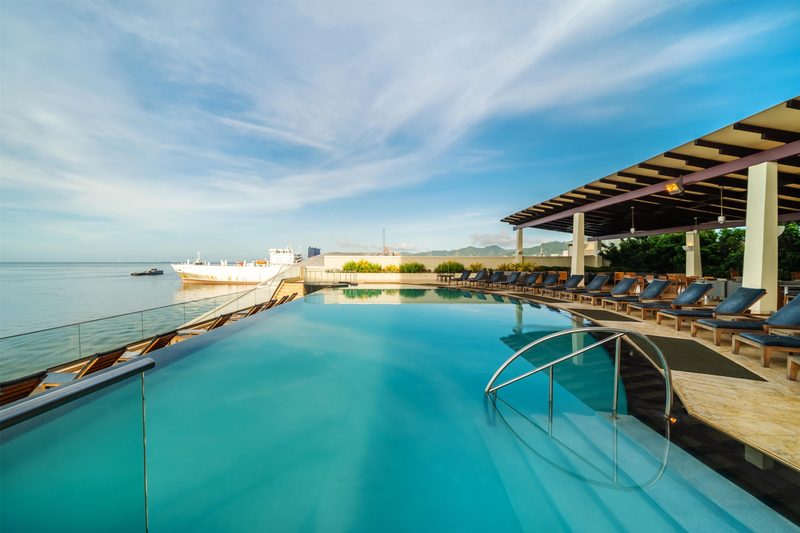
Where to Stay in Port of Spain in May
Hand-picked hotels across price tiers for May travellers.

Public Holidays in May
Dates that affect opening hours, transport and crowds
Corpus Christi
Observed nationwide as a public holiday.
Indian Arrival Day
Observed nationwide as a public holiday.
Indian Arrival Day
Observed nationwide as a public holiday.
Packing Checklist
Bookmark this page — your progress is saved between visits
Need the full list with shopping links?
Climate-specific gear, brand recommendations, and what to leave at home.
View Port of Spain Packing List →Essential Tips
Insider knowledge and common pitfalls to avoid
Insider Knowledge
The best doubles in Port of Spain are found before 9 AM, when the bara is freshest and the channa has not been sitting. George Street and the area around Curepe Junction, about 10 km (6 miles) east of the city, are where locals queue. By mid-morning the vendors pack up. By afternoon doubles becomes a memory. If you see a line of people in work clothes at 7 AM around a cart with a glass case, you have found the right vendor.
St. James, the neighborhood locals call the city that never sleeps, is where Port of Spain's nightlife lives. Ariapita Avenue runs through its center. On Friday and Saturday nights the street fills with people bar-hopping between rum shops and outdoor food stalls where the smell of grilled chicken and jerk seasoning hangs in the humid air. The crowd is overwhelmingly Trinidadian, not tourist-facing. The energy is welcoming if you approach it with respect. Start after 10 PM. Before that, the street feels like any other commercial strip.
Maxi taxis, the shared minibuses color-coded by route (red band for east, green for south, yellow for Port of Spain metro), are how most Trinis move around the city. They cost a fraction of a private taxi. The system is informal, with no published schedules. You flag them down, tell the driver your stop, and pay when you exit. The red-band maxis from City Gate terminal to Arima pass through the university campus and the eastern suburbs. They are safe during daylight hours. They are the fastest way to move through traffic, since they use the priority bus route along the East-West Corridor.
May is mango season's opening act in Trinidad. The island grows varieties you have never encountered. Julie mangoes are the prestige fruit, creamy and almost custard-like. The smaller, more fibrous long mango is what Trinis eat standing over the sink with juice running down their arms. Vendors along the Savannah and at the Central Market sell them by the bag. If someone offers you a green mango with salt, pepper, and chadon beni hot sauce, say yes. The combination of sour, salt, and heat is addictive. It makes no sense until you try it.
Avoid These Mistakes
Plan all outdoor activities in a single afternoon block. The afternoon rain in May is not a maybe, it is a when, typically between 2 PM and 5 PM. Experienced visitors front-load their outdoor time: beach by 8 AM, hike by 7 AM, return to the city by early afternoon. Use the rain hours for the National Museum and Art Gallery on Frederick Street or a long lunch. Fighting the weather pattern instead of working with it wastes half your trip.
Underestimating distances because the island looks small on a map. Trinidad is 80 km (50 miles) north to south, and the road infrastructure means a 30 km (19 mile) drive can easily take 90 minutes in traffic, along the East-West Corridor between Port of Spain and the eastern suburbs. The bottleneck at the Lady Young Road junction during morning and evening rush is notorious. If you are heading to Maracas Bay on a weekend, leave before 8 AM or resign yourself to sitting in the saddle road queue.
Treating Port of Spain like a resort destination and staying exclusively in the hotel zone. The city rewards walking, through Woodford Square, along the Savannah, and through the backstreets of St. James and Newtown, where the architecture shifts from colonial gingerbread to 1960s concrete to improvised extensions in the space of a single block. That said, be sensible about where and when you walk. Stick to populated, well-lit areas after dark, avoid East Port of Spain and Laventille unless you are with a local who knows the area, and keep valuables out of sight. Port of Spain has real safety concerns, petty theft and opportunistic crime, and pretending otherwise helps no one. The city is not dangerous in the way that fear-based travel forums suggest. But it is not Tobago either. Walk with awareness, not anxiety.
Short on time? See day trips around Port of Spain on GetYourGuide.
Ready to plan your trip to Port of Spain?
Now that you've got the research covered, here's where to go next.
Explore More Activities in Port of Spain
Didn't see anything interesting yet?
Browse Viator's full catalog of tours, day trips, food experiences, and private guides in Port of Spain.
See All Port of Spain Tours on Viator